Tell us about the job
Takes about a minute. No obligation.
The compressor in a central AC unit starts and stops repeatedly through every cooling cycle, and it is that pattern of starts, not raw calendar time, that determines where wear lands. Homes in Middlesex County, NJ run cooling about three months a year, from June through August. A contractor working a repair here checks the contactor and condenser fan motor early in the diagnosis, because those are the parts absorbing the load each season puts on the system. Refrigerant charge and coil condition follow, since a unit running through a full summer will expose a slow leak that a shorter season might leave undiscovered until the next call.
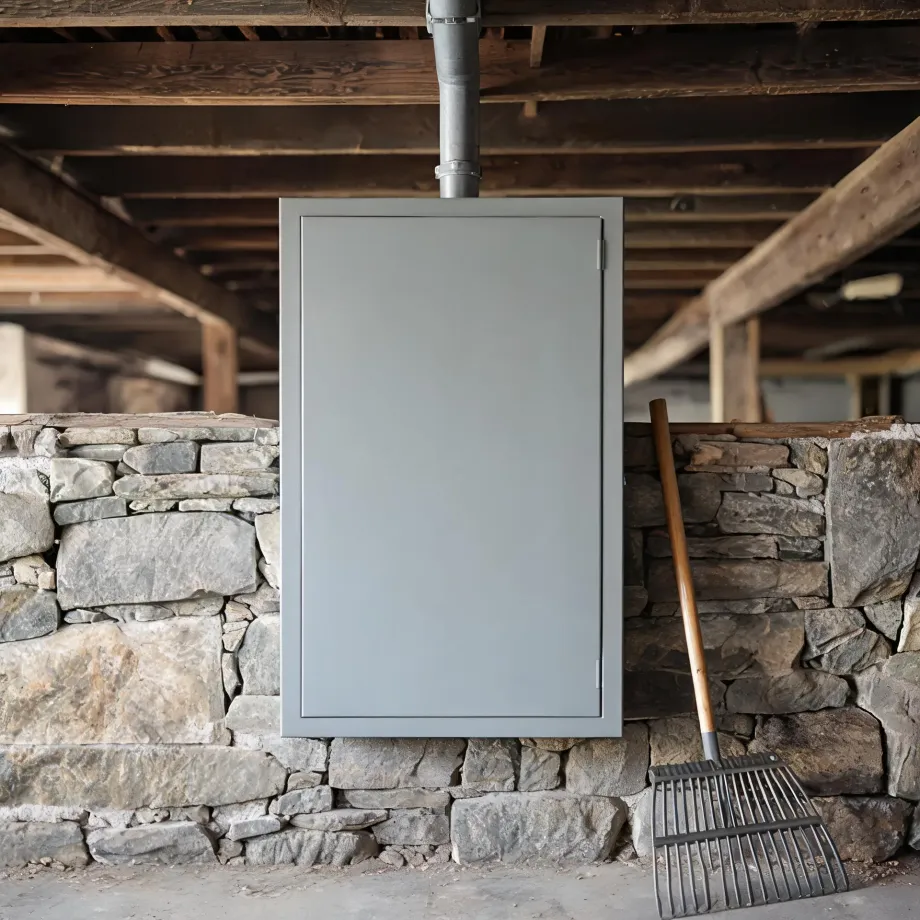
Ductwork and wiring in much of this county were fitted to equipment that is long gone. What a contractor finds once the cabinet is open matters more than the symptom that prompted the call: a compressor worn from years of cycling in a system that has already been modified once or twice, refrigerant circuits that have been recharged or rerouted, parts whose replacements may need sourcing from outside standard distribution. Half the homes in Middlesex County, New Jersey were built in 1974 or earlier (2020-2024 ACS 5-year). That history is inside the equipment, not readable from the outside, and a quote built before the unit is open is a quote built on guesswork.
The Parts of a Central AC a Contractor Checks During a Repair
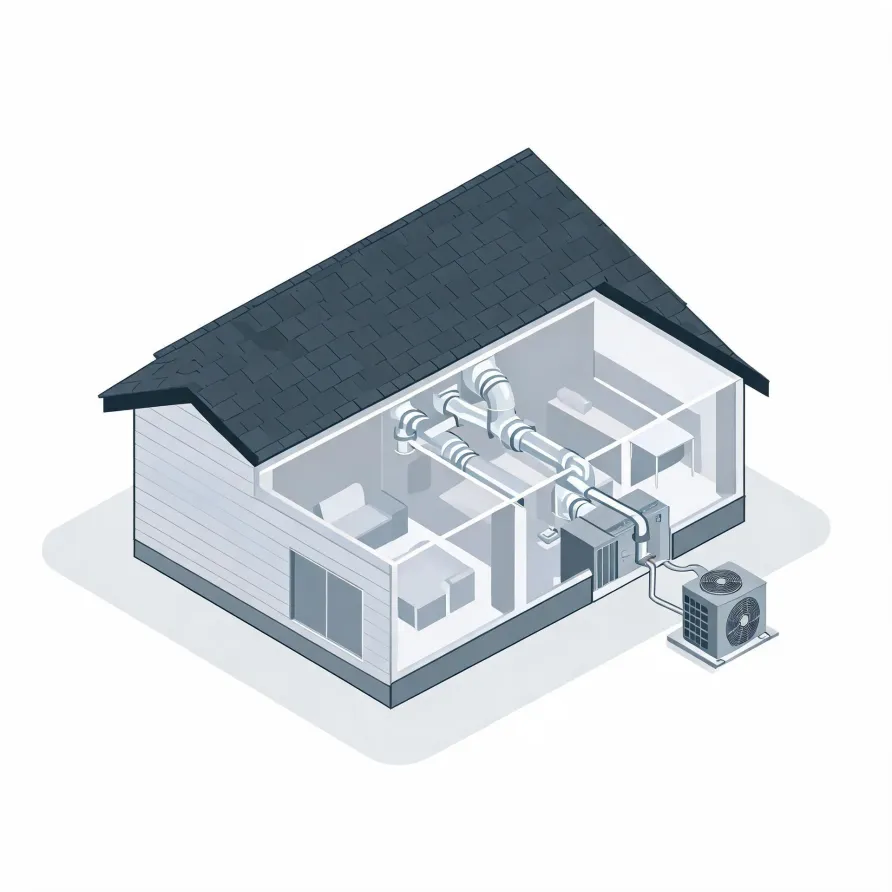
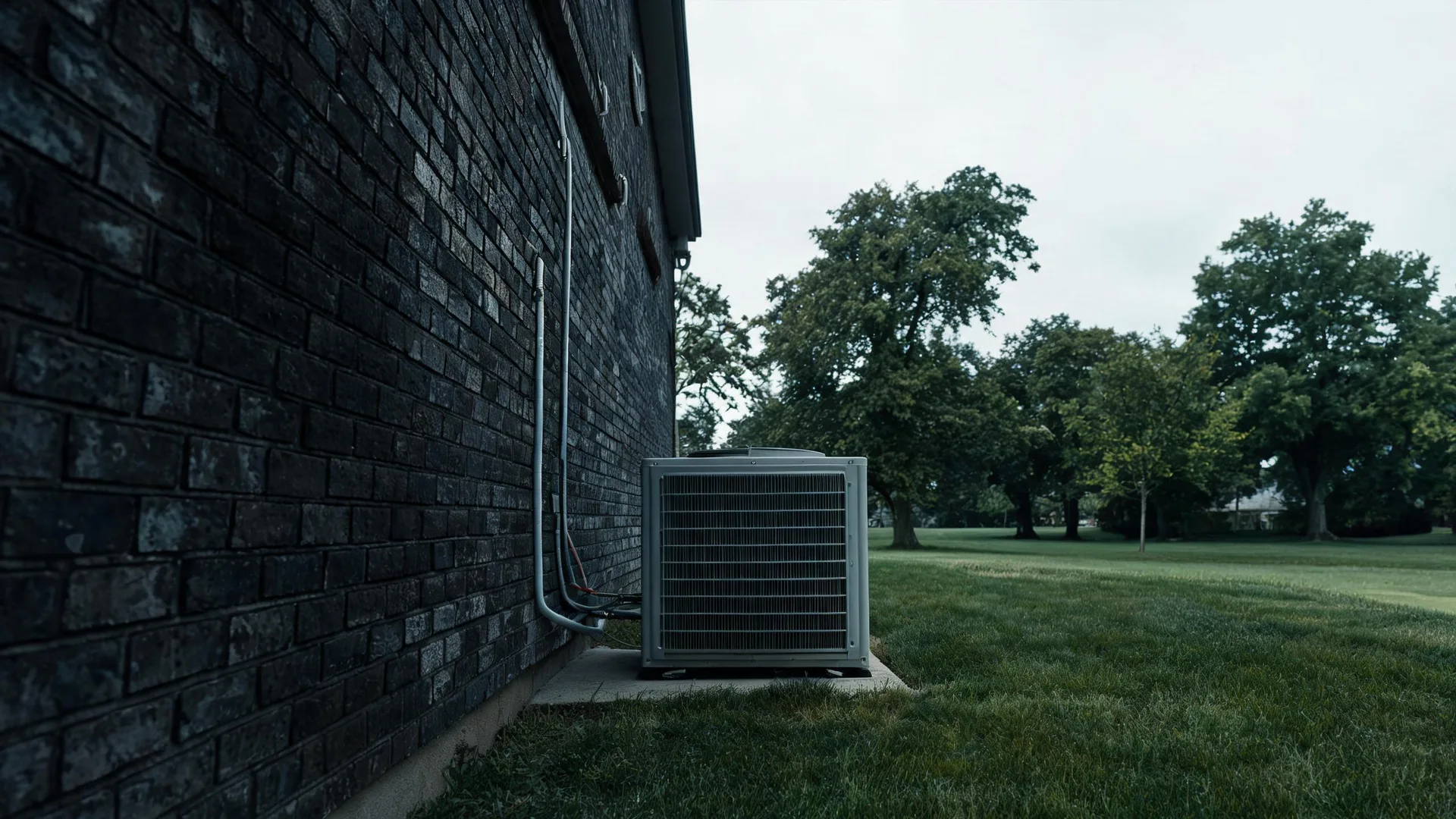
The outdoor condenser unit sits outside the house, usually on a concrete pad along a side or rear wall, and it is where heat gets shed to the outside air. The compressor lives inside that cabinet and is often the first thing a contractor tests when the system stops cooling. The air handler or furnace sits inside, typically in a basement, closet, or utility room, and it moves conditioned air through the house.
The evaporator coil mounts directly above the air handler and is a common source of trouble when airflow drops or ice appears on the system. The refrigerant lines run between the indoor and outdoor units, and a contractor checks them for leaks whenever the system is low on charge. The thermostat, though easy to overlook, is where a repair diagnosis often starts.
The drawing shows a typical central AC layout, and a licensed contractor will determine which components apply to your specific system and what each one needs.
Get matched in Middlesex CountyMiddlesex County, by the numbers
192 severe weather events were recorded in Middlesex County, New Jersey between 2015 and 2024.
NOAA National Centers for Environmental Information, Storm Events Database, bulk CSV export, events 2015-01-01 through 2024-12-31.Half the homes in Middlesex County, New Jersey were built in 1974 or earlier (2020-2024 ACS 5-year).
U.S. Census Bureau, 2020-2024 American Community Survey 5-Year EstimatesMiddlesex County, New Jersey holds 317,979 housing units (2020-2024 ACS 5-year).
U.S. Census Bureau, 2020-2024 American Community Survey 5-Year EstimatesOwners occupy 63.6% of the occupied homes in Middlesex County, New Jersey (2020-2024 ACS 5-year).
U.S. Census Bureau, 2020-2024 American Community Survey 5-Year EstimatesCodes & Standards Governing Central AC Repair in Middlesex County, New Jersey10 sourced rules and standards
What happens when a contractor comes out
Split-system central air conditioners rated below 45,000 Btu/h manufactured on or after January 1, 2023 must meet a federal minimum of 13.4 SEER2.
Split-system central air conditioners rated at or above 45,000 Btu/h manufactured on or after January 1, 2023 must meet a federal minimum of 13.4 SEER2.
Split-system central air conditioners manufactured between January 1, 2015 and December 31, 2022 had to meet 13 SEER, the metric that preceded SEER2.
Single-package central air conditioners manufactured on or after January 1, 2023 must meet a federal minimum of 13.4 SEER2.
Space-constrained central air conditioners manufactured on or after January 1, 2023 must meet a federal minimum of 11.7 SEER2.
Federal efficiency standards for split-system central air conditioners and heat pumps are set on each certified combination of outdoor unit and indoor coil rather than on the outdoor unit alone.
Residential and light commercial air conditioning and heat pump systems assembled in the field, including mini-splits and unitary systems, may not be installed on or after January 1, 2025 using a refrigerant with a global warming potential above 700.
A field-assembled system whose specified components were all manufactured or imported before January 1, 2025 carries no installation compliance date under the refrigerant restrictions and may still be installed.
Licensing Rules for HVAC Repair in Middlesex County, New Jersey
In New Jersey the HVACR licence is the State's alone: a municipality, local board of health or any other agency may not issue or renew a Master HVACR contractor's licence.
New Jersey requires a Master HVACR contractor licence: no person or business may engage in the business of HVACR contracting, or advertise as a Master HVACR contractor, without being authorised under the State HVACR Contracting License Law.
Severe Weather Events in Middlesex County
Hard weather puts real hours on cooling equipment. AC units that cycle hard through storms and heat swings wear faster, and when something breaks, the repair is a local job that depends on contractors who know this county.
192 severe weather events, 2015–2024. Source: NOAA National Centers for Environmental Information, Storm Events Database.