







An outdoor air conditioning condenser unit on a concrete pad beside a house with horizontal siding, with an electrical disconnect box on the wall and shrubs to the right in low evening light.

A pro who works on air conditioners

The R-410A phase-out and new AC units in New Jersey

R-22 is already gone, and R-410A is next on the list to be phased down. If your AC is old enough to use either one, you're probably wondering what that means for repairs, replacement, and what you're allowed to install going forward. This page walks through what's changing and what it means for a New Jersey home. Skip the research and get matched with a contractor who can look at your system directly.

Match me with a pro

R-410A hasn't been banned from homes. What changed is that as of 2025, manufacturers can no longer build new air conditioners that use it. The EPA is phasing it down the same way it phased out R-22, because R-410A contributes to warming when it leaks. If your AC already runs on R-410A, it can still be serviced and recharged for years to come. The shift matters when you're buying new: any new central air system installed now runs on a different refrigerant, usually R-454B. That system needs matching parts throughout, so it isn't something a contractor can mix into an old R-410A setup. For a New Jersey homeowner, this mostly comes up at replacement time, or when a repair on an older unit turns into a bigger decision. Given how hard your AC works through a sticky Jersey summer, it's worth knowing which refrigerant you're dealing with before that decision gets made for you.

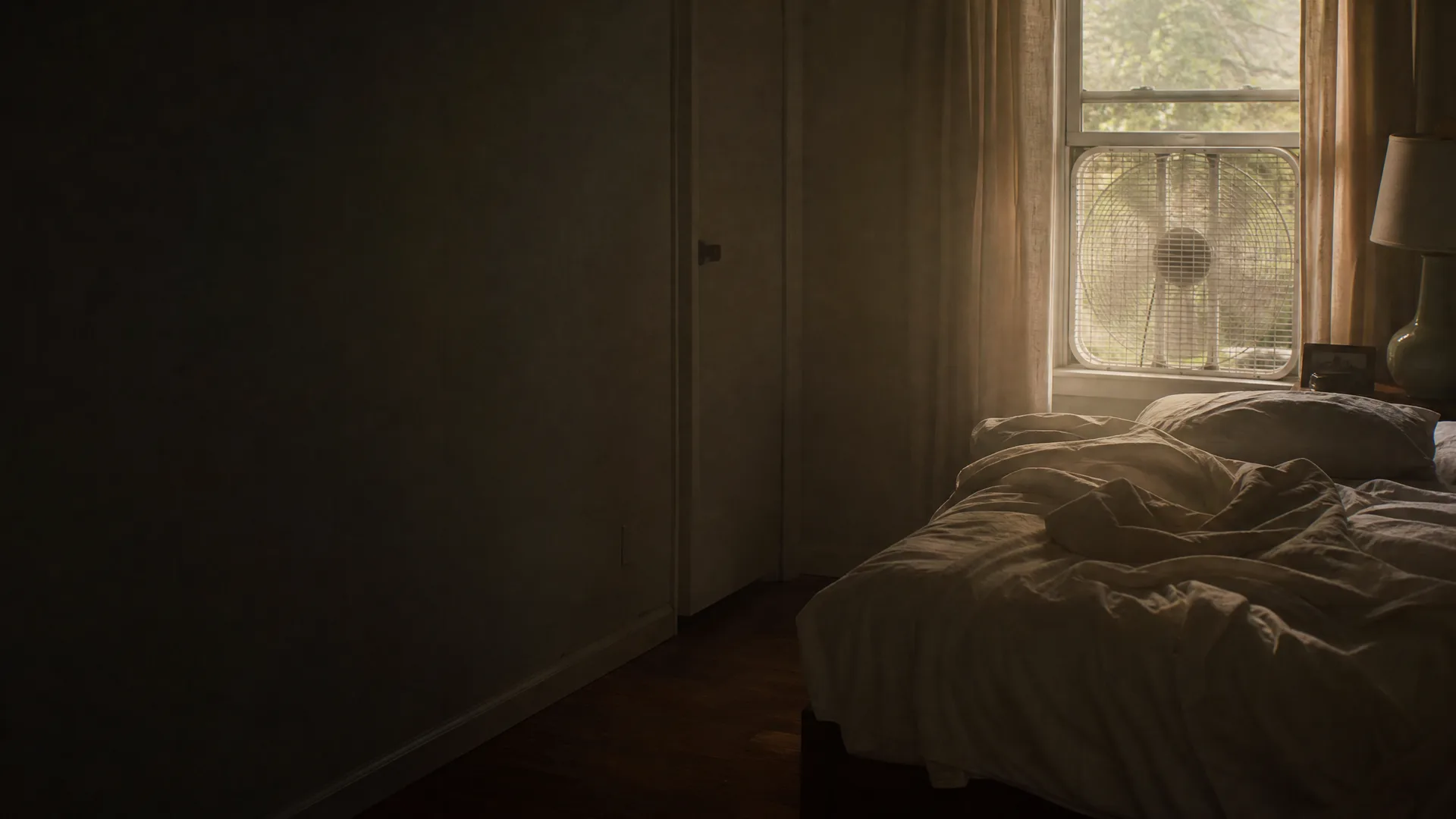
A dim bedroom with an unmade bed beside a window holding a box fan, with sheer curtains, a lamp at right and a large blank wall at left.

The box fan has been running since you got home from work, and it hasn't done much. It's past nine and still warm enough that the bedsheet feels wrong against your skin. Your son is asleep on top of the covers in his T-shirt, one arm hanging off the mattress, the window cracked behind him and the fan pulling in air that isn't any cooler than the room. Outside, the street is quiet, porch lights on, someone's AC condenser humming two yards over. You stand in the doorway a minute, listening to him breathe, before you go check the thermostat again, like checking it will change what it says.

A man seen from behind raises his hand to wave at a woman standing in the open front doorway of a single-story house with gray shingle siding, white columns and a gabled porch entry.

What's actually different about R-410A systems

An AC doesn't make cold air. It moves heat out of your house, and the refrigerant is what carries it. R-410A runs at higher pressure than the R-22 it replaced, which is why you can't just swap one for the other, the compressor, the coil, and the lines are all built around the pressure of the specific refrigerant inside them. That's true of whatever comes next too. A new refrigerant means a new compressor rated for it, so this isn't a part you swap on an old unit. It comes as a new system built around it.

If your condenser is original to the house, there's no way to know from the street whether it still runs R-410A or something older without checking the nameplate on the unit itself. That's the kind of thing worth having someone look at before you're stuck mid-July trying to source parts for a system nobody stocks anymore. A contractor who knows what's actually in your backyard, not just what the listing said, can tell you what your options are before the old unit decides for you.

A gray upholstered sofa with a textured cushion sits beside a dark round side table holding a vase of green foliage, with a table lamp and sheer-curtained window behind.
A gray-haired bearded man in a dark coat and scarf dusted with snow stands smiling in a dimly lit entryway with a white front door, a side table with a lit lamp, an oval mirror, and a patterned rug.
An older bearded man in a dark snow-dusted coat and gray scarf stands just inside a dimly lit home entry, with a framed picture, lit table lamp, and an adjoining room with a fireplace behind him, and snow visible through the open door.
A gray-haired, bearded man in a dark snow-dusted coat stands smiling in a dimly lit entry hall with a staircase, a lit table lamp, a framed picture, and a living room visible through a doorway.
An older man with gray hair and a beard, wearing a dark jacket dusted with snow, stands smiling in a dimly lit hallway with lamps and a living room visible behind him.

Repair What You Have or Replace It

Keep your R-410A unit running

  • Repairs are still available, and R-410A itself is not going anywhere from homes that already have it.
  • If a leak needs a recharge, a contractor can still source R-410A, though supply is expected to tighten as production winds down.
  • Parts for these systems (compressors, coils, fan motors) stay available since the units themselves are still common across New Jersey.
  • A unit that's cooling fine and holding its charge doesn't need to be touched just because the refrigerant is being phased down.
  • The older the system gets, the more a major repair competes with the cost of starting over with new equipment.

Install a new system

  • New air conditioners sold now use R-454B or another approved refrigerant, since manufacturers stopped building R-410A equipment in 2025.
  • A new system comes with a full warranty on parts, which an aging R-410A unit pulled out of production no longer carries.
  • Efficiency has moved on since most R-410A units were installed, which matters with New Jersey's electric rates.
  • Installation means matching equipment to your house: your ductwork, your gas furnace if you have one, your square footage.
  • A new refrigerant means new equipment designed around it, not a retrofit of what's already in your attic or beside your house.
Single-story house with gray horizontal lap siding, dark shingled gable roof, a small covered front porch with a dark door, and windows, set behind a patchy green and brown lawn under a clear blue sky.

A dew point of 63°F is the summer average across New Jersey, according to NOAA climate data. That's the number that tells you how heavy the air feels, not just how hot. Air that wet doesn't just make you sweat more. It makes your AC work two jobs at once, pulling moisture out of the air before it can even start cooling it down, which is why the house can feel sticky even when the thermostat says you're at temperature. A unit sized or running right handles that without much trouble. One that's already strained, low on refrigerant or just old, will run longer and still leave rooms feeling damp. If you're looking at a new system anyway because of the R-410A phase-out, a contractor matched to your home can size it for what New Jersey summers actually demand, not just the square footage on paper.

NASA POWER T2MDEW county cells weighted by homes

Get your air conditioner to the right pro

Answer a few questions instead of calling shop after shop.

It costs nothing to send, and you don't have to hire anyone.

What a new R-410A unit changes

A new air conditioner installed now still runs on R-410A, and that part hasn't changed. What's different is the equipment around it. Current units are built to tighter efficiency rules than the ones sold ten or fifteen years ago, so a new system installed in your house is being matched against standards that didn't exist when your old one went in. The refrigerant isn't the upgrade. The compressor, the coil sizing, and how the whole system is rated for your house are what separate a new install from a repair on what you already have.


Why the timing matters in New Jersey

New Jersey summers push a system hard for months at a time, and a unit sized or installed wrong shows it fast, through higher bills or a house that never quite cools down. Electricity here costs more than in most states, so a system running inefficiently costs you more here than it would somewhere with cheaper power. Replacing before a system fails, rather than after, means you're not choosing equipment in a hurry during a heat wave. A planned install gives a contractor room to size the system to your house instead of swapping in whatever's on the truck.

A woman wrapped in a thick beige fleece blanket sits on a sofa with an open book on her lap, beside a lit table lamp, with a frost-covered window behind her.
An older woman with gray hair in a bun and glasses, wearing a beige knit sweater, smiles while looking to the side in a warmly lit kitchen, with a loaf of bread on the counter in the foreground and a snowy scene outside the window.

Your air conditioner doesn't make cold air. It moves heat from inside your house to outside, and refrigerant is what carries it. The compressor squeezes refrigerant gas until it's hot and under high pressure, then sends it to the outdoor unit. There, the fan pulls air across the condenser coil so that heat can escape, and the refrigerant turns back into a liquid. A metering device drops that liquid's pressure right before it reaches the indoor coil. Lower pressure lets the refrigerant evaporate again, and evaporating is what pulls heat and moisture out of the air blowing across it. That's the loop, over and over, as long as the system runs. R-410A moves through this same loop, but at higher pressure than R-22 ever did. That's why the coils, the lines and the compressor in an R-410A system are built to hold more than older equipment was. If the loop develops a leak anywhere along it, the pressure it depends on drops, and weaker cooling is usually the first thing you notice, before anything else tells you something's wrong.

How your AC actually cools

  • A compressor pulls low-pressure refrigerant gas from the indoor coil and squeezes it into a hot, high-pressure gas before sending it outside.
  • The outdoor fan pulls air across the condenser coil so that hot refrigerant gas can give up its heat and turn back into a liquid.
  • A metering device drops the liquid refrigerant's pressure right before it enters the indoor coil, which is what lets it absorb heat again.
  • The indoor coil is where the refrigerant evaporates and pulls heat and moisture out of the air moving across it.
  • R-410A holds more pressure through this whole loop than R-22 did, which is why its coils, lines and compressor are built to different specs.
  • A leak anywhere in that loop drops the pressure the system depends on, and low pressure is what shows up first as weak cooling.
A gray outdoor air conditioning condenser unit on a concrete pad beside a house with horizontal siding and a stone veneer base, with refrigerant line and electrical disconnect box on the wall and flowering shrubs to the left.
A system like this is still charged the way it should be, and the refrigerant lines run clean into the wall.
An outdoor air conditioner condenser unit on a concrete pad beside a house with light gray horizontal siding, with mulch and green shrubs on either side and a concrete walkway in the foreground.
Years of dirt packed into the fins make the unit work harder to move the same heat, and a leak here gets harder to recharge as R-410A supply shrinks.

Is your AC struggling to keep up this summer

You notice it most in the late afternoon, when the unit outside is running but the air coming out of the vents doesn't feel as cold as it used to. Maybe it takes longer to bring the house down to the temperature you set, or it never quite gets there on the muggiest days. You might hear it cycling on and off more than it used to, or notice the outdoor unit running almost constantly. If the system is low on refrigerant from a slow leak, it's also pulling less moisture out of the air, so rooms feel damp even when the thermostat reads fine. Left alone, a unit working that hard wears down faster and costs more to run every month it keeps struggling.

  1. Refrigerant leaks out slowly through a worn line or coil.

  2. The system runs low and loses its cooling capacity.

  3. A gauge set checks the charge against the target pressure.

  4. A contractor finds the leak point and seals or replaces it.

A weathered outdoor air conditioning condenser unit on a concrete pad beside a house with light horizontal siding, an electrical disconnect box and conduit on the wall, and mulched soil on either side.
Before you get your air conditioner installation
A gray outdoor air conditioner condenser unit on a concrete pad beside a house with horizontal vinyl siding, surrounded by mulch, flowering shrubs, and lawn.
After you get your air conditioner installation

Power costs 22.48 cents per kilowatt-hour statewide

At 22.48 cents per kilowatt-hour, every inefficient hour your AC runs shows up on the bill fast. An older R-410A unit losing capacity doesn't just cool worse, it pulls more power to do less, and in New Jersey that difference costs real money over a summer.

EIA-861 2025 statewide residential average

Where your AC stands now

  • R-22 is gone from new production, and R-410A follows the same path, phased down rather than pulled from homes that already run on it.
  • A system low on charge works harder for less cooling, and in New Jersey that shows up fast on a bill with power priced near 22.48 cents per kilowatt-hour.
  • Repairs stay available for now, but R-410A supply is expected to tighten as manufacturers stop building new units around it.
  • A new unit installed today still runs on R-410A, built to tighter efficiency rules than what's running in a lot of New Jersey homes now.
  • Instead of calling around and explaining the same leak or the same slow cooling to every contractor, you answer once and a contractor who handles this reaches out to you.

Nothing about R-410A forces your hand this summer. The phase-down affects what manufacturers can build, not what you're allowed to keep running or repair. If your system is working, it keeps working, and a contractor can still service it. The question is really about where things are headed. Supply gets tighter as production shifts away from R-410A, which matters most if your unit already struggles to hold its charge. A system that's losing refrigerant slowly costs you twice, once in comfort and once on a power bill that's already among the highest in the country. That math gets worse each summer a marginal unit limps along, not better. None of this means you have to replace anything before it's ready. It means that when a repair stops making sense, what replaces it is a unit built to tighter efficiency standards than what's likely running in your house now, still on R-410A, still serviceable for years. Whether you're chasing down a leak or weighing a replacement, the usual path is calling a few contractors, explaining the same symptoms each time, and sorting through quotes that aren't quite comparable. You can skip that part. Answer once, with what's actually happening with your system, and a contractor who handles R-410A units in New Jersey homes reaches out to you directly.

An outdoor air conditioner condenser unit on a concrete pad beside a dark horizontal-lap sided house, with mulch beds, shrubs and ornamental grasses nearby.

The right pro for this job

Describe your air conditioner job once, to one pro.

Step 1 of 3: Equipment