Tell a local repair pro what your air conditioner is doing.
A capacitor that's failing usually doesn't quit all at once. The outdoor unit hums but the fan won't spin, or it clicks and tries to start and gives up. Sometimes the air blows warm for a few minutes before the compressor kicks in late. On a muggy New Jersey afternoon, any one of these is worth taking seriously, because a capacitor that's struggling now tends to fail completely on the next hot day, usually when you need the system most.
You don't have to figure out whether it's the capacitor, the contactor, or something else in the outdoor unit. That's the kind of call a local contractor makes in a few minutes, by listening to the unit and testing it directly.
Getting matched with the right contractor matters more than it sounds like. New Jersey summers put real strain on outdoor units, and a contractor who works on this equipment all season knows which capacitors tend to go first and what else to check while they're already out at your unit. That's different from a random call center sending out whoever's free.
When you request service through this page, you're matched with one licensed, local contractor, not a handful of companies competing for the job. That contractor reaches out to you directly. You're not stuck fielding calls from five different outfits or repeating your situation over and over. It's one point of contact, someone familiar with the kind of systems installed in homes around here, handling it from there.
Power costs enough in this state that a dying capacitor making your compressor work harder than it should isn't something to ignore. The sooner someone qualified looks at it, the sooner you know whether it's a simple part swap or something more.
Why does my AC capacitor keep failing in New Jersey?
Your AC capacitor has already been replaced once, maybe twice, and it's failed again. You want to know if it's bad luck or if something else is working against it before you pay for another one.
Heat and a hard-working compressor wear capacitors out faster
A capacitor is rated to handle a certain amount of heat, and the outdoor unit sitting in direct sun through a New Jersey summer runs hotter than that rating assumes. Heat breaks down the chemical paste inside it a little more every season, so one that's already a few years old is living on borrowed time. If your compressor is also straining because the system is low on refrigerant or the coil is dirty, it draws more current through the capacitor every time it starts, and that extra draw shortens its life further. Replacing the capacitor alone doesn't fix the strain causing it to fail, which is why it can happen again within a season or two.
The fan spins right up and the compressor kicks in without delay, holding a steady cycle through the hottest part of the day.
The fan sits still while the unit hums, or it strains to start and quits, a sign the capacitor is giving out.
A capacitor is just a small cylinder wired into the outdoor unit, but both the fan motor and the compressor depend on it. It holds a charge and feeds it out to keep those motors spinning steady once they're running. If your system has a start capacitor too, that one fires once, gives the compressor a push to get moving, then steps out. New Jersey summers are hard on them. The heat alone wears down the chemistry inside, and a unit that bakes in full sun most of the day tends to go through capacitors faster than one with some shade. You can check a capacitor's condition against the microfarad number printed on its case. A reading that's drifted more than around six percent off means it's no longer holding charge the way it should, even if the unit still starts most of the time. Sometimes you can see it before you test it, the top of the case bulging slightly or a little oil at the seams. Left alone, a weak capacitor forces the compressor to strain every time it starts, and that strain is what turns a capacitor swap into a compressor replacement.
What the Capacitor Actually Does
The run capacitor stores a charge and releases it to keep the compressor and fan motors turning at the right speed once they start.
A start capacitor, where the system has one, gives the compressor a jolt of extra torque for the first second or two, then drops out of the circuit.
Heat breaks capacitors down from the inside, and the oil inside can dry out faster when the outdoor unit sits in direct sun most of the day.
A capacitor is rated in microfarads, printed right on the case, and a reading more than about six percent off that number means it's done.
The case itself often tells the story, bulging slightly at the top or leaking a bit of oil at the seams once it's failed.
A capacitor that's run weak for weeks can take the compressor motor windings down with it, turning a small part into a bigger repair.
A capacitor that's already failed once tends to fail again sooner the second time, especially after a summer of long, hot stretches like New Jersey gets from June through August. Every start and stop wears it down a little more, and a system that's been cycling hard all season has had more of those starts than one that's barely run. By the time you hear that hum without the fan spinning, or feel warm air lingering before the compressor catches, the part is telling you plainly what it needs. Guessing at a replacement without knowing why the last one failed just buys you another summer of the same call. A licensed New Jersey contractor who works on these systems all season has seen which units chew through capacitors and why, and can tell you in one visit instead of a second and third guess. Your request goes to one contractor, someone local who already knows this equipment, not a string of strangers bidding on your address.
Running the way it should
The fan turns the moment the unit kicks on, and the compressor follows without hesitation. It settles into a steady hum and holds that cycle through the hottest part of the afternoon, pulling the heat and stickiness out of the house without a fight.
A capacitor on its way out
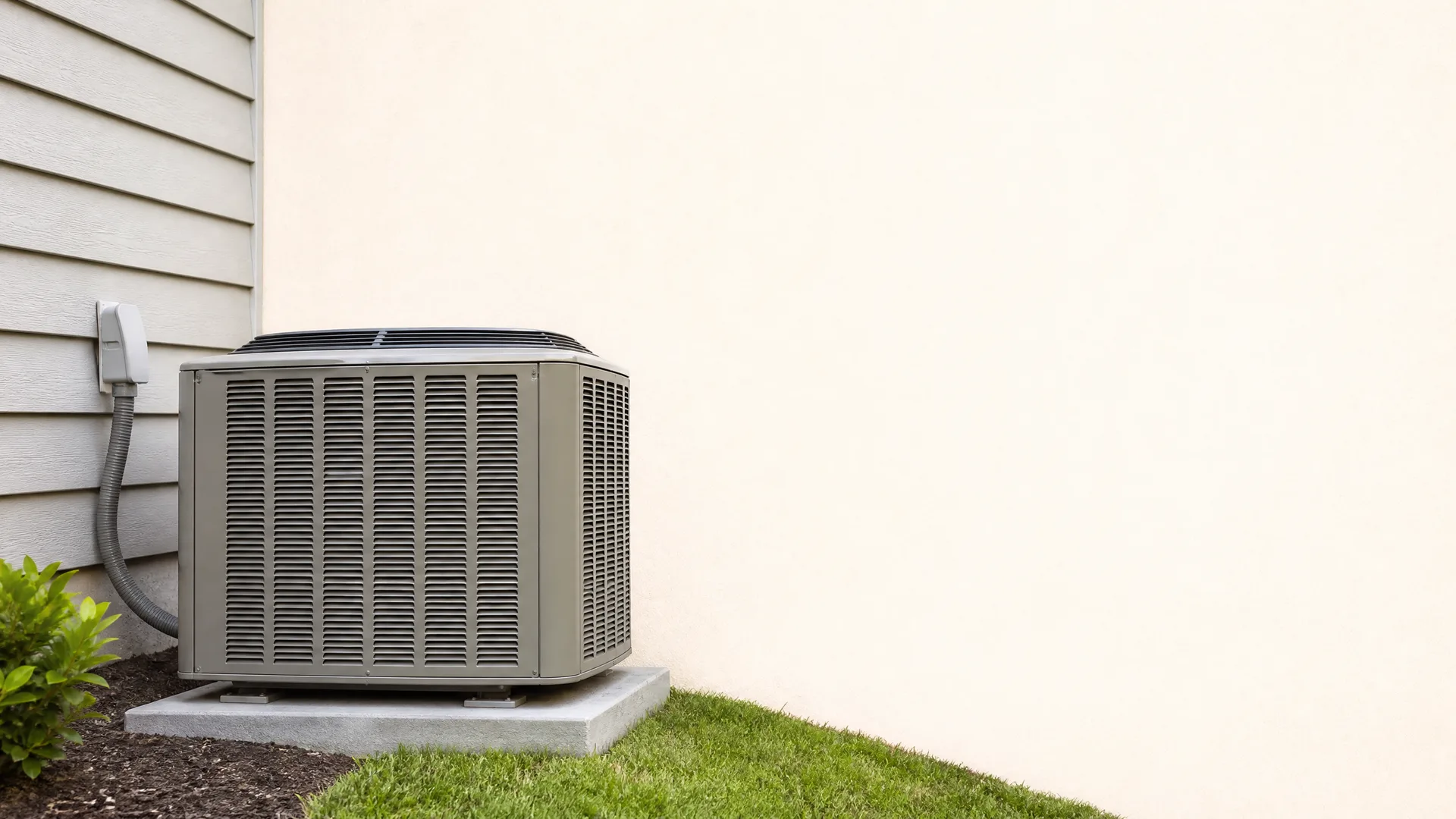
Dirt has built up on the grilles, and the unit shows its age. Refrigerant lines and wiring still run into the disconnect box like they should, but a weak capacitor inside means the fan may stall or the compressor may lag before it catches. Left alone, it tends to get worse, not better.
Weak Capacitor or Failed Capacitor
Weak Capacitor
The fan hesitates a beat before it spins, or the outdoor unit hums for a second or two before anything moves.
On a hot afternoon, the air coming through the vents turns warm for a few minutes before it cools back down.
The unit shuts off and restarts more often than it used to, even though the thermostat setting hasn't changed.
A capacitor losing its charge tends to get worse over a few weeks, not better, especially during a stretch of 90-degree days.
The compressor draws harder to do the same job, which shows up as a higher electric bill before the unit ever fails outright.
A contractor can test a capacitor's microfarad reading against its rating in a few minutes, before it fails for good.
Failed Capacitor
The outdoor unit hums steadily but the fan blade doesn't turn at all, even when you nudge it by hand.
Nothing happens when the thermostat calls for cooling: no hum, no click, no fan.
The compressor tries to start, clicks off, and tries again every few seconds without ever catching.
Warm air blows through the vents nonstop, with no cool stretch at any point in the cycle.
A breaker that keeps tripping when the AC tries to start points to a capacitor that's given out rather than one just weakening.
Once it's gone, the system won't run at all until a contractor who works on this equipment every summer swaps it out.
Heat is hard on capacitors
A capacitor is rated for a range of temperatures, and the outdoor unit sits in direct sun through a New Jersey summer with no shade and no airflow relief. The heat inside that cabinet runs well above the air temperature around it. Every degree past what the part is rated for shortens its life a little more, and a compressor working through a stretch of 90 degree days asks more of the capacitor than one running in April or October.
What the capacitor actually does
Inside the capacitor are two metal plates separated by a material that holds a charge. Heat and constant cycling break that material down over time, and the capacitor stores less charge than it's rated for. Once it drops far enough below that rating, it can no longer give the motor the push it needs to start, even though the unit still has power running to it and still hums when it tries.
What a bad capacitor costs you at home
A capacitor that's struggling makes your system run longer to do the same job. The compressor labors to start, the cycle stretches out, and the electric bill reflects it before anything actually quits. New Jersey power rates make that difference harder to ignore than it would be somewhere cheaper. You might not notice a dollar amount so much as the house staying a few degrees short of comfortable on the days you need it most.
Keep running a system on a weak capacitor and you risk the compressor itself, which costs far more to replace than the part that was warning you. If this is a repeat failure, or you're not sure what you're looking at when you check the unit, it helps to have someone local who works on these systems all summer look at it directly. A single contractor who knows the equipment common in New Jersey homes can tell you whether this is the capacitor again or something feeding into it, without you fielding calls from several companies to find out.
Power costs 22.48 cents per kilowatt-hour statewide
A struggling capacitor makes the compressor fight to start, and that fight pulls more power than a clean start does. At 22.48 cents per kilowatt-hour, that extra draw shows up fast on your bill, especially if the unit's been running rough for weeks before you noticed.
EIA-861 2025 statewide residential average
Before you get your air conditioner repairAfter you get your air conditioner repair
New Jersey summers don't just run hot, they run heavy. Average out a June, July and August here and the dew point sits at 63°F, the number that tells you how much moisture is actually sitting in the air you're breathing. That's the kind of air your capacitor has to push through every time it starts the compressor. Thick, humid air makes the whole system work harder to pull moisture and heat out of your house, so the compressor draws more and runs longer on a sticky afternoon than it would on a dry one. A capacitor already losing its charge feels that extra load first. You'll notice it as a system that used to keep up now falling behind on the muggiest days, cycling longer and still leaving the house feeling damp.
NASA POWER T2MDEW county cells weighted by homes
A failing capacitor shows itself in the way the unit starts, not the way it runs once it's going. Hum with no fan movement, a slow start, warm air before the cool kicks in, short cycling, these are the signs, and once you've seen one you don't need to see the rest to know what's happening. The part is cheap to replace but hard to diagnose safely yourself with the unit live, which is why this one goes to someone licensed rather than a guess with a multimeter. A contractor local to New Jersey who services these systems every summer has likely seen more dead capacitors than any other single part on the unit, because the heat and the humidity here wear on them harder than almost anywhere else. You'll be matched with one contractor, not several, so the call you get back is from someone who already knows what you're describing before they get to your door.