Tell us about the job
Takes about a minute. No obligation.
A central AC compressor that quits on the first hot day of July has rarely failed because of summer. Homes in Morris County, NJ run cooling about two months a year, from July through August. What a contractor finds in that compressor reflects how it was left at the end of the previous season, a refrigerant leak that sat unaddressed, a contactor worn from prior starts, a capacitor that was already marginal. The compressor, the condenser fan, and the electrical components all sit idle through most of the year, so the fault that kills a system on day one of cooling was present long before anyone called.
Ductwork installed for one generation of equipment and then left in place through two or three subsequent systems accumulates problems that show up as repair calls on the newest unit. Half the homes in Morris County, New Jersey were built in 1971 or earlier (2020-2024 ACS 5-year). A contractor opening a failed component here checks whether the fault is in the equipment or in what feeds and returns air to it, because ducts that have been patched, rerouted, or simply aged can starve a system that would otherwise run fine. The repair bill follows whichever answer that inspection produces.
The Parts of a Central AC a Contractor Checks First
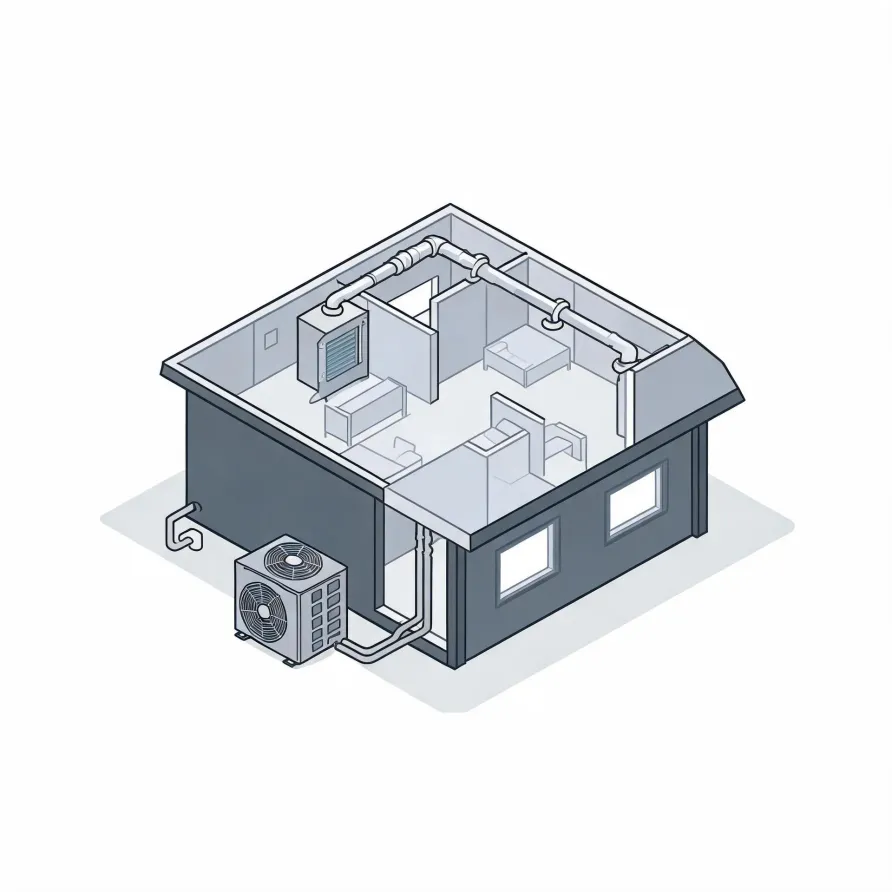
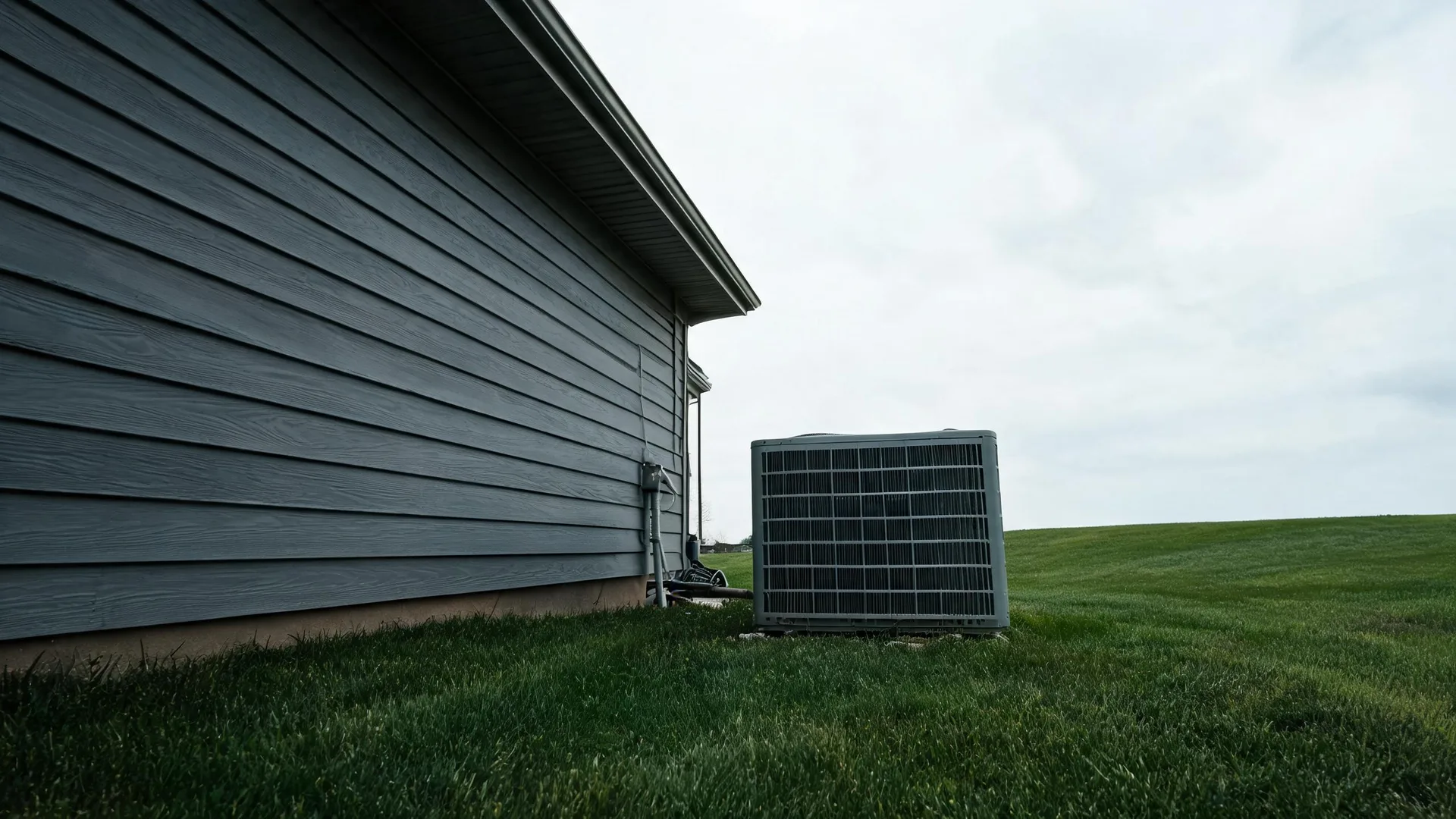
The outdoor condenser unit sits on a pad outside the house and holds the compressor and condenser coil, which are the pieces that release heat pulled from inside. When either fails, the system runs but produces no cooling, or shuts down entirely. The condenser coil and compressor are where a contractor starts.
Inside the house, the air handler holds the evaporator coil and the blower. The evaporator coil absorbs heat from indoor air, and the blower pushes that air through the house. A refrigerant line set runs between the two units, and a contractor checks it alongside the coils and the blower when diagnosing a problem.
The drawing shows a typical layout, and a licensed contractor determines what applies to your specific system and home.
Get matched in Morris CountyMorris County, by the numbers
248 severe weather events were recorded in Morris County, New Jersey between 2015 and 2024.
NOAA National Centers for Environmental Information, Storm Events Database, bulk CSV export, events 2015-01-01 through 2024-12-31.Half the homes in Morris County, New Jersey were built in 1971 or earlier (2020-2024 ACS 5-year).
U.S. Census Bureau, 2020-2024 American Community Survey 5-Year EstimatesMorris County, New Jersey holds 199,506 housing units (2020-2024 ACS 5-year).
U.S. Census Bureau, 2020-2024 American Community Survey 5-Year EstimatesOwners occupy 74.3% of the occupied homes in Morris County, New Jersey (2020-2024 ACS 5-year).
U.S. Census Bureau, 2020-2024 American Community Survey 5-Year EstimatesRules & Standards Behind Central AC Repair in Morris County, New Jersey10 sourced rules and standards
What HVAC Repair Looks Like in Morris County
Split-system central air conditioners rated below 45,000 Btu/h manufactured on or after January 1, 2023 must meet a federal minimum of 13.4 SEER2.
Split-system central air conditioners rated at or above 45,000 Btu/h manufactured on or after January 1, 2023 must meet a federal minimum of 13.4 SEER2.
Split-system central air conditioners manufactured between January 1, 2015 and December 31, 2022 had to meet 13 SEER, the metric that preceded SEER2.
Single-package central air conditioners manufactured on or after January 1, 2023 must meet a federal minimum of 13.4 SEER2.
Space-constrained central air conditioners manufactured on or after January 1, 2023 must meet a federal minimum of 11.7 SEER2.
Federal efficiency standards for split-system central air conditioners and heat pumps are set on each certified combination of outdoor unit and indoor coil rather than on the outdoor unit alone.
Residential and light commercial air conditioning and heat pump systems assembled in the field, including mini-splits and unitary systems, may not be installed on or after January 1, 2025 using a refrigerant with a global warming potential above 700.
A field-assembled system whose specified components were all manufactured or imported before January 1, 2025 carries no installation compliance date under the refrigerant restrictions and may still be installed.
What Morris County and New Jersey Require for HVAC Repair
In New Jersey the HVACR licence is the State's alone: a municipality, local board of health or any other agency may not issue or renew a Master HVACR contractor's licence.
New Jersey requires a Master HVACR contractor licence: no person or business may engage in the business of HVACR contracting, or advertise as a Master HVACR contractor, without being authorised under the State HVACR Contracting License Law.
Severe Weather Events in Morris County
Extreme weather puts real hours on HVAC equipment. Every event that spikes heat or cuts power is a load the system has to absorb, and that cumulative stress is what drives repair calls in Morris County.
248 severe weather events, 2015–2024. Source: NOAA National Centers for Environmental Information, Storm Events Database.